
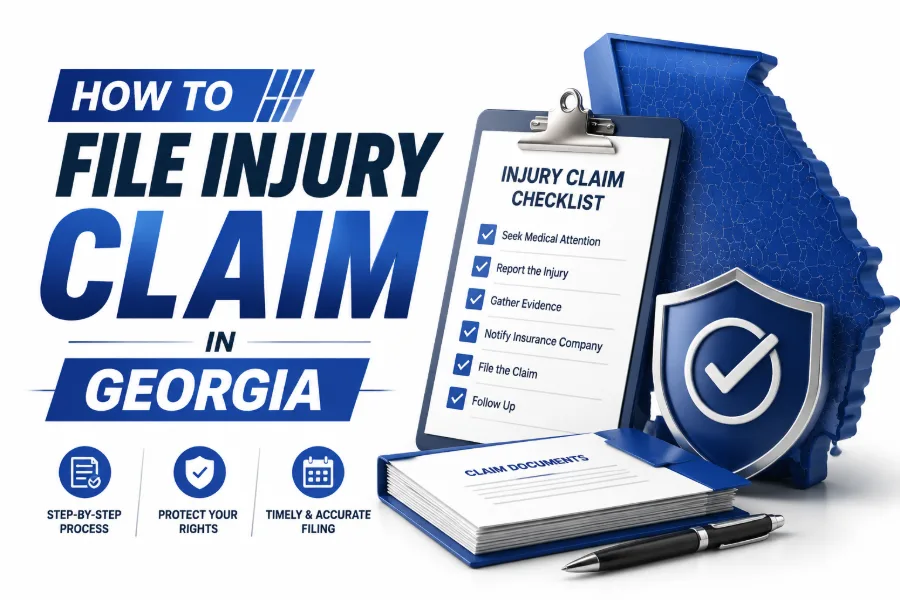
How to file injury claim in Georgia is one of the first questions you may ask after an accident leaves you hurt, stressed, and unsure who should pay your bills.
The answer depends on where the injury happened, who caused it, whether you were working, and how quickly you protect your evidence. This guide explains deadlines, documents, insurance steps, and lawsuit preparation to help you avoid mistakes that could weaken your case.
How To File Injury Claim In Georgia Without Confusing Claim Types
Before you file anything, identify whether your injury belongs in a personal injury claim, a workers’ compensation claim, or both. A personal injury claim focuses on proving that another person, business, driver, property owner, or negligent party caused your harm, while a workers’ compensation claim focuses on whether your injury happened during covered job duties.
Attorney service pages can also show how lawyers describe case review, evidence, deadlines, and communication expectations; a page such as trusted injury lawyer duluth is a legal service page, not a Georgia filing form, so use it only as an example of what an injury-lawyer service page may explain; for a Georgia claim, your next step is to match the right process to your accident location and deadline.
This distinction matters because the rules are different. In a negligence claim, you usually deal first with an insurance adjuster, then move toward a lawsuit if settlement talks fail. In a work injury claim, you may need to report the injury to your employer, use an authorized medical provider, and file the correct workers’ compensation form if benefits are delayed or denied.
Start With Medical Treatment And A Clear Injury Record
Your medical record is the foundation of your injury claim because it connects the accident to your diagnosis, treatment plan, pain level, and recovery limits. You should get medical care as soon as possible, even if you think the injury may improve, because delayed care gives an insurer room to argue that the accident was not serious or that something else caused your symptoms. Tell each provider exactly when, where, and how the injury happened, but avoid guessing about medical issues you do not understand.
Keep every discharge summary, prescription receipt, imaging report, referral, therapy note, and bill because these records help show both the cost and seriousness of your damages. Follow the treatment plan carefully, attend appointments, and document missed work or activity limits in writing. If your symptoms change, report those changes to your provider instead of waiting until the claim is already disputed.
Preserve Evidence Before It Disappears
Strong evidence helps prove what happened before memories fade, video footage is deleted, vehicles are repaired, or unsafe property conditions are changed. Take photos of the scene, injuries, damaged property, lighting, weather, warning signs, floor hazards, vehicle positions, and anything else that shows how the event occurred. If witnesses saw the accident, write down their names and contact details because neutral witnesses can become important when the other side disputes fault.
You should also save police reports, incident reports, emails, texts, insurance letters, repair estimates, and wage records. A simple folder on your phone or computer can keep your claim organized from day one. Do not post about the accident because insurers may use photos, comments, or location activity to challenge your pain, limitations, or version.
Report The Injury To The Right Person Or Company
After emergency needs are handled, notify the correct party that an injury occurred. If the accident involved a vehicle, report it to law enforcement when required, notify your insurer, and get the other driver’s insurance information. If it happened at a store, apartment complex, workplace, hotel, restaurant, or public location, ask for an incident report and save the reference number.
For workplace injuries, Georgia workers generally must report the injury to the employer within 30 days, so waiting can create unnecessary risk. Report the injury in writing when possible, include the date, time, place, body parts affected, and how the accident happened. Keep the tone factual because emotional accusations can distract from the details that actually prove your right to benefits.
Understand Georgia Deadlines Before You Negotiate
Deadlines shape every injury claim because the insurance company knows whether you still have time to sue. In many Georgia personal injury cases, the deadline to file a lawsuit is two years from when the right of action accrues, but some claims have different notice rules. Treat the deadline as a final filing date, not a target date for starting the process.
Government-related injury claims can require earlier notice, and workers’ compensation claims have their own reporting and filing rules. This is why you should not wait until treatment ends before asking what deadline applies to your case. A claim can be valuable and still be lost if you miss the filing window, fail to notify the right party, or use the wrong procedure.
Know What Damages You Are Claiming
An injury claim is not just a request for money; it is a documented explanation of what the accident cost you. Your damages may include emergency care, follow-up treatment, prescriptions, therapy, medical devices, lost wages, reduced earning capacity, property damage, travel, and future care. You may also have non-economic damages such as pain, suffering, inconvenience, emotional distress, and loss of normal daily activities.
The stronger your documentation, the easier it is to explain why the settlement demand is reasonable. Use pay stubs, employer letters, tax records, medical opinions, and receipts. Avoid giving the adjuster a random settlement figure before you understand your diagnosis, expected recovery time, and whether future treatment will be needed.
Prepare For Georgia’s Fault Rules
Georgia uses a fault-based approach in many injury lawsuits, so the percentage of responsibility assigned to each person can change the value of your case. If you share some blame, your compensation may be reduced by your percentage of fault, and if you are found 50 percent or more responsible, you may be barred from recovering damages. That makes evidence about speed, warning signs, lighting, witness statements, safety policies, and accident timing extremely important.
You should expect the insurance company to look for ways to shift blame. They may argue you were distracted, ignored a hazard, delayed treatment, failed to follow medical advice, or made the accident worse. Your job is to keep the record clean, factual, and complete so the claim is evaluated on evidence rather than assumption.
Send A Demand Only After The Case Is Developed
A demand letter tells the insurance company what happened, why its insured is responsible, what injuries you suffered, and how much compensation you are seeking. A weak demand sent too early can undervalue the claim because you may not yet know the full medical outcome. Wait until you have enough medical records, bills, wage proof, liability evidence, and future-treatment information to support the amount requested.
A good demand package should read like a clear story supported by documents. It should explain the accident, connect negligence to your injuries, summarize treatment, list damages, and give the insurer a fair deadline to respond. Keep copies of everything sent because negotiation often depends on showing exactly what the adjuster received and when.
File A Lawsuit If Settlement Talks Fail
Filing a lawsuit does not always mean your case will go to trial. It usually means settlement talks failed, the deadline is approaching, liability is denied, injuries are undervalued, or the insurer refuses to offer a fair amount. The lawsuit begins with a complaint that identifies the parties, explains the facts, states the legal basis for liability, and asks for damages.
After filing, the defendant must be served and given time to answer. The case may then move into discovery, where both sides exchange information, answer written questions, request documents, take depositions, and evaluate expert opinions. Many cases still settle during litigation because discovery reveals strengths and weaknesses that were hidden during the insurance phase.
Treat Workers’ Compensation Differently
A Georgia workers’ compensation claim is different from a standard negligence claim because you usually do not need to prove your employer was careless. Instead, the focus is whether you were an employee covered by the system, whether the injury happened in the course of employment, and whether the requested medical or income benefits are supported. Georgia’s State Board of Workers’ Compensation explains that the program can provide medical, rehabilitation, and income benefits for job-related injuries.
You may need Form WC-14 if benefits are denied, delayed, or disputed. You should also use an authorized physician when required, keep wage records, save prescription receipts, and send copies of the claim form to the employer and workers’ compensation insurer. If your injury happened while working but a third party also caused it, you may need to consider both workers’ compensation and a separate injury claim.
Avoid Mistakes That Reduce Claim Value
Small mistakes can create large problems in an injury claim. Do not ignore medical advice, miss appointments without explanation, give recorded statements casually, accept a quick settlement before understanding future care, or sign broad releases without understanding them. Also avoid minimizing symptoms to doctors and then describing severe limits later, because inconsistent statements can hurt your credibility.
Keep communication professional with insurers, employers, property managers, and opposing parties. Do not guess, argue, threaten, or volunteer unnecessary information. When you do not know an answer, it is better to say you do not know than to provide a rushed statement that later turns out to be inaccurate.
Build A Claim File You Can Actually Use
Your claim file should make the case easy to understand. Create sections for medical records, bills, wage loss, photos, witness details, insurance letters, repair estimates, prescriptions, travel expenses, and your injury journal. A well-organized file helps you respond faster when an adjuster asks for documents and helps prevent key details from being forgotten.
Your journal should be factual, not dramatic. Note pain levels, sleep problems, missed activities, mobility limits, work restrictions, medication side effects, and help you need from family or friends. These details can support pain and suffering, but they work best when they match your medical records and daily reality.
Conclusion
How to file injury claim in Georgia starts with choosing the right claim path, getting medical care, preserving evidence, reporting the injury, and watching every deadline. If your claim is based on negligence, you must prove fault, damages, and the connection between the accident and your injuries.
If your injury happened at work, you must follow workers’ compensation reporting rules, authorized treatment, and WC-14 filing requirements. Treat the claim like a timeline, not a single form. Document what happened, protect your records, avoid careless statements, and do not wait until the deadline is close. When each step is handled carefully, you give yourself a stronger chance of recovering fair compensation under Georgia law.